Where not to invest in Europe: Greece econ.st/1TAd3CZ http://t.co/X9vtnz0uhQ—
The Economist (@EconBizFin) July 15, 2015
Where not to invest in Europe
18 Jul 2015 Leave a comment
in applied price theory, applied welfare economics, comparative institutional analysis, economics of bureaucracy, economics of regulation, industrial organisation, law and economics, property rights, Public Choice, rentseeking, survivor principle Tags: doing business, Eurosclerosis, Greece
Maggie Thatcher on the Greek crisis
17 Jul 2015 Leave a comment
in applied welfare economics, budget deficits, comparative institutional analysis, constitutional political economy, currency unions, economic growth, economic history, economics of regulation, Euro crisis, fiscal policy, income redistribution, macroeconomics, Marxist economics, Public Choice, rentseeking Tags: Greece, growth of government, Margaret Thatcher, size of government
Latin American populism versus the East Asian Tigers
17 Jul 2015 Leave a comment
in comparative institutional analysis, constitutional political economy, development economics, economics of bureaucracy, growth disasters, growth miracles, income redistribution, Public Choice, rentseeking Tags: East Asian Tigers, Latin American populism
Growth paths of #LatAm & the Caribbean the South East Tigers: wrld.bg/NCtLt #RiseoftheSouth http://t.co/IFuUOWldox—
World Bank Pubs (@WBPubs) May 31, 2015
How to argue for inequality and neoliberalism when arguing dead set against it
17 Jul 2015 Leave a comment
in economic growth, economic history, human capital, income redistribution, labour economics, labour supply, politics - New Zealand, poverty and inequality, Public Choice, rentseeking Tags: Leftover Left, neoliberalism, top 1%
On 12 August last, Closer Together New Zealand posted a chart showing average hourly wages had been stagnant for 20 years and then started growing again in 1993. Closer Together New Zealand then rounded up the usual suspects of the Left over Left.
Later that month in a comment on that post, a chart was posted showing that inequality had been increasing quite rapidly in the late 1980s and early 1990s in New Zealand. There were a range of economic reforms Closer Together New Zealand didn’t like in the late 1980s and early 1990s.
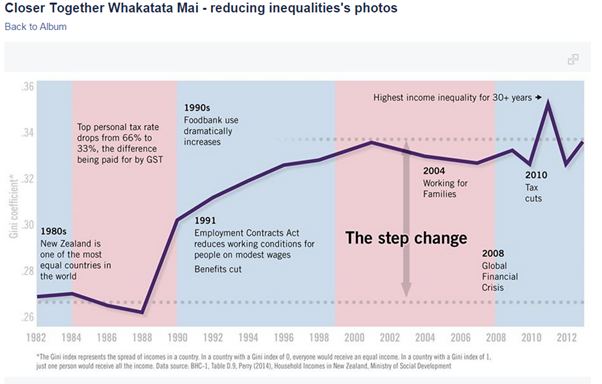
Closer Together New Zealand did not notice their second chart showed there had been a large increase in inequality, and their first chart showed that this was followed by the return of regular average hourly wages after 20 years of stagnation.
I am not so vulgar as to suggest correlation is causation, but it is amusing to watch that one day a chart is posted showing a resumption of wages growth after 20 years of wage stagnation and the next day a chart is posted showing that the major economic developments in the preceding years were a large increase in inequality and substantial economic liberalisation.
To add to my amusement, a companion site Inequality A New Zealand Conversation posted a chart showing the top 1% had not had much at all in income growth for the last 20 years while most everyone else had. This spike in the incomes of the top 1% prior to about 1994 was followed by the resumption in average wages growth after 1994.
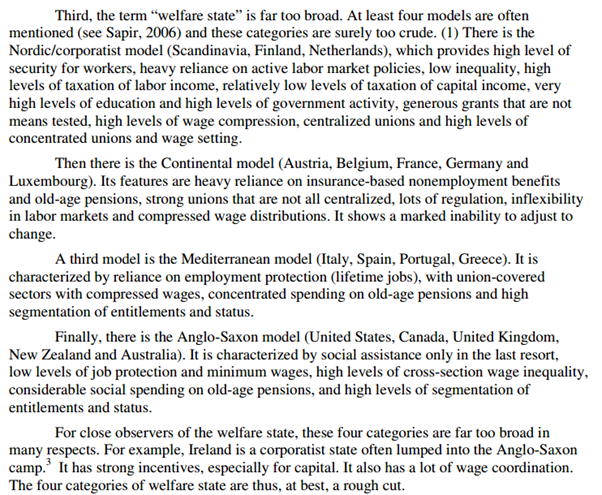
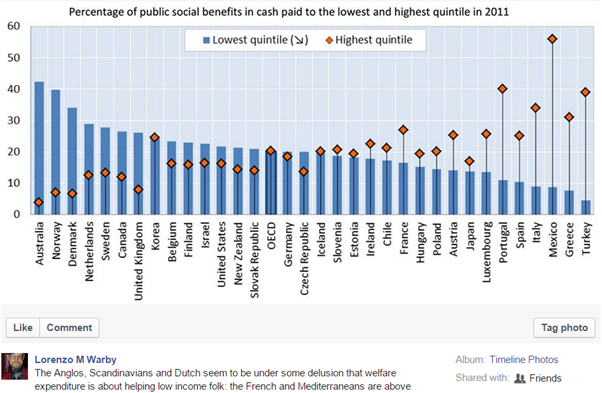
James Hackman and the four types of welfare state
16 Jul 2015 Leave a comment
in constitutional political economy, income redistribution, Public Choice, rentseeking, welfare reform Tags: Director's Law, James Hackman, social insurance, welfare state
And the rich got richer, who cares
16 Jul 2015 Leave a comment
in applied price theory, applied welfare economics, Austrian economics, comparative institutional analysis, constitutional political economy, development economics, economic history, economics of bureaucracy, economics of education, economics of regulation, economics of religion, energy economics, entrepreneurship, environmental economics, financial economics, growth disasters, growth miracles, income redistribution, industrial organisation, international economics, labour economics, labour supply, liberalism, poverty and inequality, Public Choice, rentseeking, survivor principle, transport economics, urban economics Tags: Deirdre McCloskey, entrepreneurial alertness, The Great Enrichment, The Great Escape, The Great Fact, top 1%
"The rich got richer, true. But…" —@DeirdreMcClosk buff.ly/1Imdv4o http://t.co/M3ERx3JTIn—
HumanProgress.org (@humanprogress) June 28, 2015
Should Majorities Decide Everything?
15 Jul 2015 Leave a comment
in comparative institutional analysis, constitutional political economy, economics of bureaucracy, income redistribution, liberalism, Public Choice, rentseeking Tags: constitutional law, expressive voting, median voter theorem, Mike Munger, rational ignorance, rational irrationality, tyranny of the majority
@oxfamnz @GreenpeaceNZ Further evidence of mass kidnappings of principled environmentalists – indoor pollution version
14 Jul 2015 1 Comment
in development economics, energy economics, environmentalism, growth disasters, growth miracles, health economics, Public Choice, rentseeking Tags: air pollution, climate alarmists, expressive voting, global warming, green hypocrisy, indoor pollution, Kuznets curve, rational irrationality, The Great Escape
The deadliest environmental problem today is indoor air pollution — killing 4 million a year. vox.com/2014/9/15/6150… http://t.co/xtwLRfkVF2—
Vox Maps (@VoxMaps) June 11, 2015
Members of Congress spend a ton of time fundraising
14 Jul 2015 Leave a comment
in constitutional political economy, politics - USA, Public Choice, rentseeking Tags: campaign finance reform, campaign finance regulation, lobbying, special interests

William Easterly on the Tyranny of Experts and the Forgotten Rights of the Poor
13 Jul 2015 Leave a comment

Good old left-wing hate speech at its best
12 Jul 2015 Leave a comment
in economic history, economics of media and culture, entrepreneurship, income redistribution, Public Choice, rentseeking Tags: British elections, expressive voting, free speech, hate speech, London newspapers, media bias, rational ignorance, rational irrationality
I agree with @D_Blanchflower – I wish newspapers didn't spin elections and played it straight, like they used to… http://t.co/5btL7PAFWe—
Fraser Nelson (@FraserNelson) May 07, 2015
New Zealand teachers’ unions are above average in their effectiveness
12 Jul 2015 Leave a comment
in economic history, economics of education, income redistribution, labour economics, Public Choice, rentseeking, unions Tags: public sector unions, teachers union, union power, union wage premium
Puerto Rico’s economy can’t handle the federal minimum wage
11 Jul 2015 Leave a comment
in applied price theory, applied welfare economics, Federalism, income redistribution, labour economics, labour supply, minimum wage, politics - USA, Public Choice, rentseeking Tags: federalism, living wage, Puerto Rico, sovereign default
Puerto Rico's economy can't handle the federal minimum wage. bit.ly/1IEJIEi http://t.co/D3mzOmlnJa—
Manhattan Institute (@ManhattanInst) July 07, 2015
Why is Labour so staunch on its left-wing policies – the voters must come to them – but opportunistic on race?
11 Jul 2015 Leave a comment
in constitutional political economy, international economics, law and economics, politics - New Zealand, property rights, Public Choice, rentseeking Tags: antiforeign bias, antimarket bias, left-wing populists, New Zealand First, New Zealand Labour Party, political opportunism, racism, rational ignorance, rational irrationality, right-wing populists, traditional labour voter, working class Tory
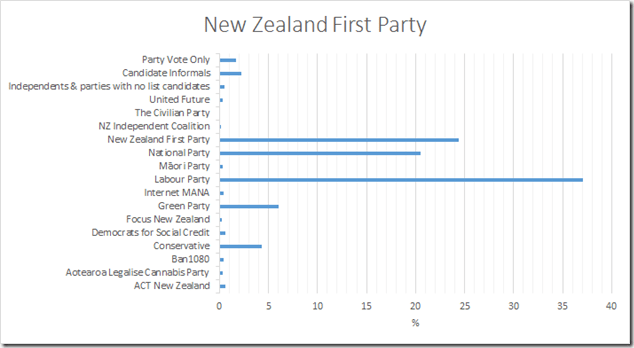
Figure 1: who won the electorate vote of New Zealand First party voters, 2014 New Zealand election
Source: Electoral Commission.
New Zealand First vote splitting data in Figure 1 suggests many more Labour voters vote New Zealand First than for the National Party with their electorate votes.
1/3rd of voters who gave their party vote to New Zealand First voted Labour with their electorate vote. This compares to one in five New Zealand First voters who gave their electorate vote to the National Party.
The Labour Party can win back some traditional Labour voters by borrowing populist policies from New Zealand First and its ageing leader such as prohibiting foreigners from buying New Zealand land.
Who mentioned Shane Jones?
In politics we don't pull our punches, unless you've got one of the world's best in town! http://t.co/Xiz2l36btg—
Winston Peters (@winstonpeters) August 08, 2013


Recent Comments