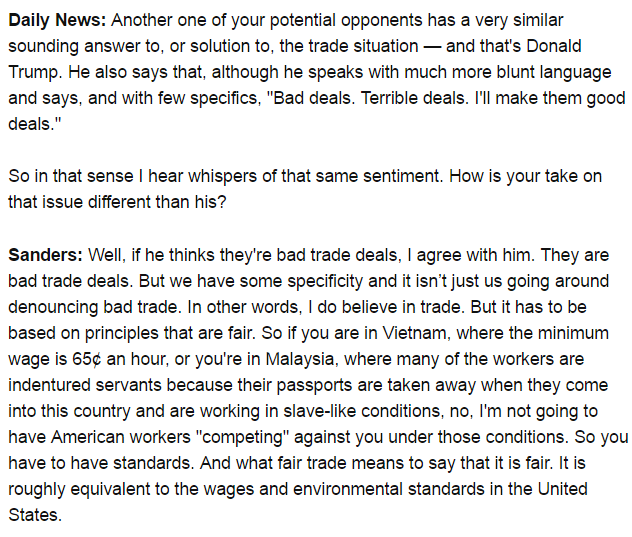
The cost of starting a business in Europe and North America

These measures including the full cost of starting a business. Not only are official fees included, the opportunity cost of the waiting times for various permits are issued are added as well.

image

Source: Markus Poschke, Entry regulation: Still costly | VOX, CEPR’s Policy Portal (2011).

Note: The value of time is set to a business day’s output per day of waiting time at 22 business days per month.


Walter Block defends multinational corporations in developing countries

image

Source: Quotation of the day….. – AEI | Carpe Diem Blog » AEIdeas.

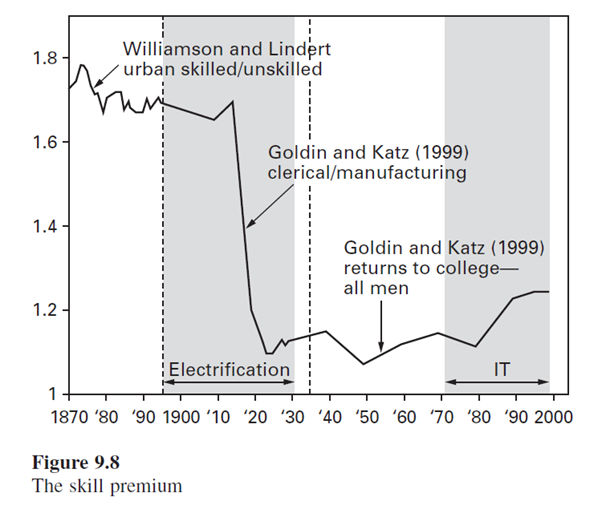
Is the direction of technological change mostly skill biased?

image

Source: Philippe Aghion and Peter Howitt THE ECONOMICS OF GROWTH.

Water Policies for People, by David Zetland

Will the population bomb prevent the great stagnation?

If only Paul Ehrlich had been right! Population explosion would have meant an explosion in people who could invent new technologies and populate in much larger markets to provide an incentive to invent new products.

Among Paul Ehrlich’s many analytical errors, he did not take into account that more people meant more inventors and more untapped markets.

Jones argued that in the very long run the only way to have further innovation is to have more people. If there are more people undertaking R&D and more people to populate the markets for those inventions, there will be further growth because the decreasing returns to knowledge creation will be overcome by having more R&D workers.

Jones attributes much of the growth in the 20th century to one-off effects that cannot be repeated such as putting more people into higher education:

… growth in educational attainment, developed-economy R&D intensity, and population are all likely to be slower in the future than in the past. These factors point to slower growth in US living standards.

Second, a counterbalancing factor is the rise of China, India, and other emerging economies, which likely implies rapid growth in world researchers for at least the next several decades.

Third, and more speculatively, the shape of the idea production function introduces a fundamental uncertainty into the future of growth. For example, the possibility that artificial intelligence will allow machines to replace workers to some extent could lead to higher growth in the future.

A larger population increases the rate of technological progress by increasing the number of geniuses and other creative people.The doomsday prophecies about the population bomb never took that into account. That is why they are wrong.

Picking winners and @stevenljoyce’s repayable grants to 11 more tech start-ups @JordNZ

imageMinister for Science and Innovation Steven Joyce picked a few more winners today. Eleven more start-up technology companies are to be funded $450,000 each in repayable loans to commercialise their technology. The loans are from Callaghan Innovation’s incubator network.

To cut a long diatribe short, I find these sums of money rather piddling. I have encountered this corporate welfare program before at a presentation.

My reaction then as is now: by handing out such small grants, some will succeed, some will fail. Importantly, there will never be one big disaster to bring the whole show down. There is political safety in diversification.

This is not the case with, for example, film subsidies. If Sir Peter Jackson and others finally produce a box office bomb, it will be all too glaring that the taxpayers backed a Hollywood loser with hundreds of millions of dollars. $500 million in subsidies in the case of Avatar.

By peppering small sums of money across the economy, there is no similar risk from this repayable grant scheme for the commercialisation of products.

Creative destruction of camera sales is not yet complete

image

Source: A Few Thoughts About the Camera Market via Paul Kirby

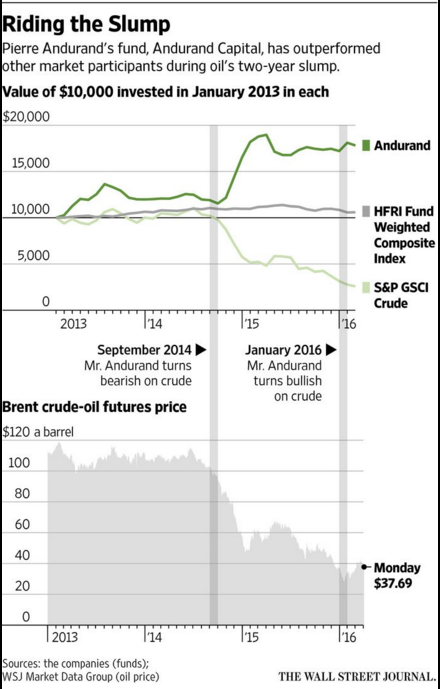
Are hedge funds profiting from #peakoil?

image

Image

Forever Contemporary – The Economics of Ronald Coase | Free book from Institute of Economic Affairs

Summary:

  • R. H. Coase (1910–2013), a leading modern figure in the classical liberal tradition, was awarded the Nobel Prize in Economics in 1991 for his analysis of the significance of transaction costs and property rights for the functioning of the economy.
  • Before Coase’s work in the 1930s, there was no real understanding of the relation between the theory of the firm and the theory of markets. Coase showed that the size and structure of firms, and the location of the border between internal exchange within the firm and external exchange through markets, are systematically related to the costs of transactions.
  • These transaction costs, which Coase termed ‘costs of using the price mechanism’, include search and information costs (those involved in finding business partners, rather than having to produce your own inputs), bargaining costs (which rise sharply with the number of contractual partners) and enforcement costs (which, in the absence of a strong and effective legal framework, depend largely on trust in partners). When these costs alter dramatically, for example, as a result of introducing innovative technology, we can expect substantial alterations in firm and market structures.
  • Coase was a pioneer in the modern analysis of environmental issues. He showed that, with clear property rights and low transactions costs, private solutions to many environmental problems can be achieved without government regulation. Such solutions were logically independent of the initial distribution of property rights. This is highly relevant to a number of modern economic problems which the government currently handles badly, such as land-use planning.
  • His work has had a profound effect on later generations of economists, several of whom themselves won Nobel Prizes. His work on environmental issues, for example, influenced another Nobel Prizewinner in Elinor Ostrom, whose work focused on how common pool resources could be used effectively with minimal government intervention. This is especially relevant to debates about environmental and ecological degradation in forestry, fishing and game animal resources – perhaps particularly in developing economies.
  • Similarly his work on the firm led to the development of the ‘New Industrial Economics’, now associated with Oliver Williamson, which has changed our understanding of issues of economic governance. This is relevant to current concerns over corporate social responsibility.
  • Coase’s editorship of the Journal of Law and Economics over many years did much to stimulate economic analysis of legal institutions, an innovation which has had a major influence on public policy, particularly in the US. It has fed, for instance, into recommendations for accident compensation.
  • Coase’s insights have challenged economists’ assumptions about the nature of public goods, which he demonstrated could often be provided more effectively by various forms of private initiative. He also illuminated such varied topics as the allocation of spectrum bandwith, the regulation of financial institutions and water resource management.
  • Methodologically, Coase was opposed to ‘blackboard economics’ which relied on theory or econometric analysis at the expense of more practical investigation. He favoured careful examination of case studies and the history of industries when analysing economic policy issues.
  • His work retains considerable significance in the twenty-first century. Coase’s analysis of China’s economic advance, published shortly before his death, sheds light on its future prospects, while his transaction cost approach can be argued to explain the new phenomenon of the ‘sharing’ economy which is reshaping businesses and employment. Furthermore his work should continue to be at the forefront of debates surrounding regulation, broadcasting and the environment. If policymakers and the economists who advise them ignore Coase, they are in danger of perpetuating policies which may work ‘in theory’ but do not work effectively in practice.

Source: Forever Contemporary – The Economics of Ronald Coase | Institute of Economic Affairs

More on creative destruction in search engines

image

Image

Is Kiwibank profitable enough to take on the big banks?

if Kiwibank is part of the competitive fringe of an oligopoly made up of the 4 Australian banks, it is not very profitable for a competitive fringe of a cartel as the chart below shows. The other New Zealand owned small banks in that competitive fringe are not that profitable at all. Undercutting an oligopoly and its high prices and above-average cost and above marginal cost pricing is not what it used to be for the competitive fringe in New Zealand banking, if there ever was a cartel.

image

Source: G1 Summary information for locally incorporated banks – Reserve Bank of New Zealand.

Bank customers can choose between four major banks and a competitive fringe. If those major banks are indeed overcharging because of price-fixing by a cartel or an oligopoly, that competitive fringe which includes Kiwibank has a real opportunity to expand profitably and with little risk.

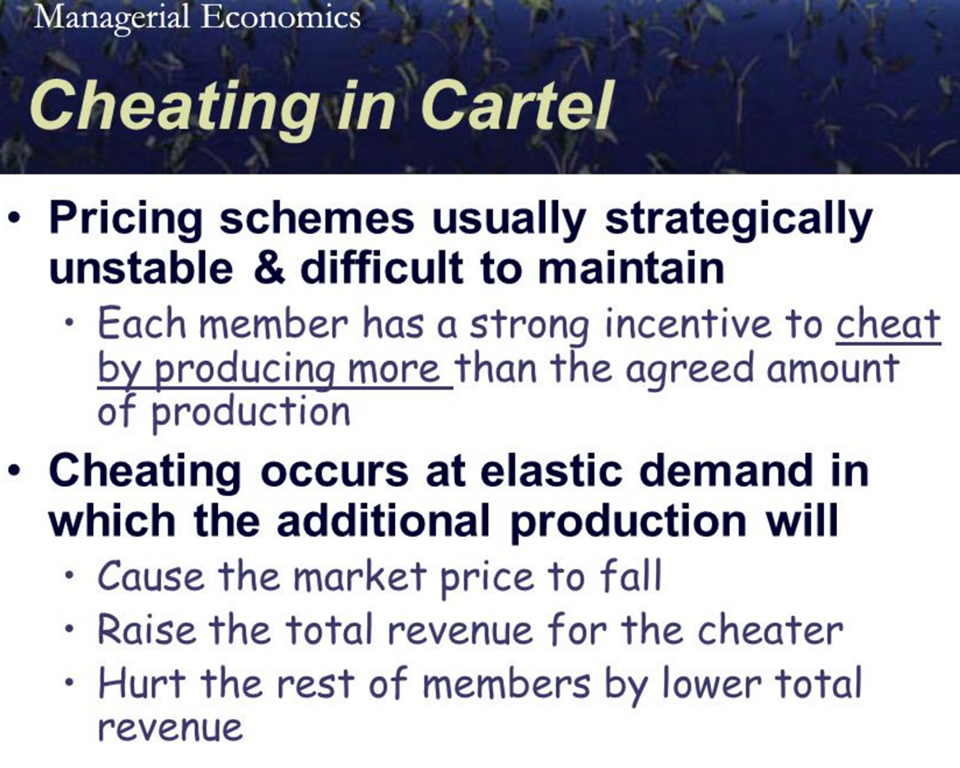
The prospect of expansion by the competitive fringe that includes Kiwibank only increases the incentives on each of the four big banks to cheat on the cartel price. The first bank to cheat on the cartel will profit the most; the other banks who are colluding know this. As George Stigler concluded in his 1964 paper “The Theory of Oligopoly” as Peltzman and Carlton explain:

…once a price is somehow agreed upon, there will be incentives for individual rivals to cheat on the [collusive] agreement. Whether cheating occurs depends on weighing the profits from not cheating against the profits from cheating and then being detected and having competition break out…

any agreement among sellers cannot ignore the incentives to cheat provided by lags in detection. So understanding when a price elevated above the competitive level can be an equilibrium requires an analysis of the dynamic consequences of cheating versus not cheating…

Collusion over retail banking services and prices faces major hurdles that will lead to most attempts at price-fixing having a short life. These barriers to successful collusion include:

  • numerous competitors,
  • expansion by the smaller banks were not part of the cartel or cheat on the cartel
  • the entry and expansion of new banks,
  • the lack of a standard product,  and
  • a rapidly changing business environment.

Implicit understandings among the colluding banks may break down owing to conflicts over the most suitable price, the complexities of co-ordinating pricing across a diverse range of banking products, or the simple presence of a maverick bank.

As time passes, destabilising pressures within a banking cartel or oligopoly will build due to long-run substitution and the threat or actuality of entry by new banks and expansion by banks In the competitive fringe, which includes Kiwibank.

The first firm in any market may charge a high price relative to costs, but the entry of one or two more firms usually results in effective competition. Once there are three to five suppliers in a market, an additional entrant has little impact on prices because pricing is already as competitive as it can be.

When ANZ sought to acquire the National Bank of New Zealand in 2003, the Commerce Commission did not oppose this merger. The Commission did not consider that a substantial lessening of competition would follow this merger. The Commission said:

…the merger is unlikely to increase the likelihood of co-ordinated market power in the supply of transaction accounts because the fringe players are likely to provide some competition, the banks have different strengths and weaknesses and in particular ASB is unlikely to have the incentive to participate in co-ordinated power at the expense of its recent growth and customer satisfaction levels.

This analysis of co-ordinated market power applies to each of the relevant markets. Therefore the Commission concludes that the merger is unlikely to result in a substantial lessening of competition in the supply of transaction accounts.

In the supply of mortgages, savings accounts and credit cards the merger is unlikely to lead to a substantial lessening of competition, as in each of these markets, ASB, Westpac and BNZ are likely to provide sufficient competition to the combined entity.

An important driver of a competition in the mortgage market in 2003 was a high incidence of fixed-rate mortgages and the tendency of these fixed rate mortgagees to reconsider all their options at the end of each fixed rate term.

The Commission Commission noted that there was a large re-mortgaging market in New Zealand. Banks offer to do all the work for customers  wishing to switch over bank accounts and direct debit arrangements.

In a very atypical move for a purported cartel, in 2010 the bank owned Payments New Zealand agreed to change over direct debits over automatically when a customer switched banks, which made switching banks even more easier.

At the time of the ANZ and National Bank merger, the Commerce Commission noted that Kiwibank was offering lower rates on its mortgages as a way of gaining a foothold in the market.

The Commerce Commission could not have been more right about the vigour in competition in retail banking with regard to re-mortgaging and switching between fixed and floating mortgages in New Zealand.

As the chart below  of fixed and floating mortgage shares  a New Zealand bank balance sheets shows, there is a rapid exodus from fixed rate mortgages at the time of the Global Financial Crisis.

image

Source: S8 Banks: Mortgage lending ($m) – Reserve Bank of New Zealand.

I cannot see how any cartel or oligopoly could sustain price-fixing against such dynamic changes in market shares and product switching.

Cartels are is much more difficult to agree when there are many products about which to fix prices and market shares. At a minimum, this rapid movement of customers between mortgage products will sow suspicions that one or more rival banks is stealing customers thereby cheating on the cartel agreement. Not surprisingly, the history of cartels is a history of double-crossing. Banking is no exception.
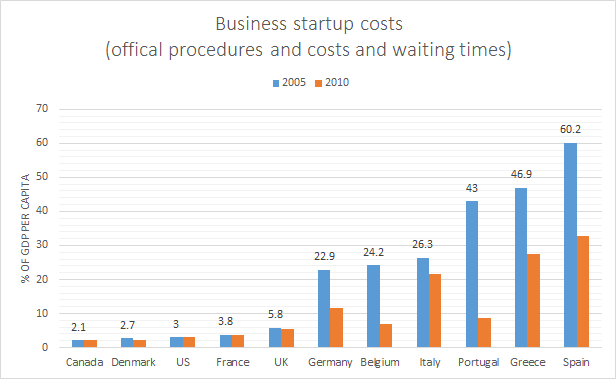
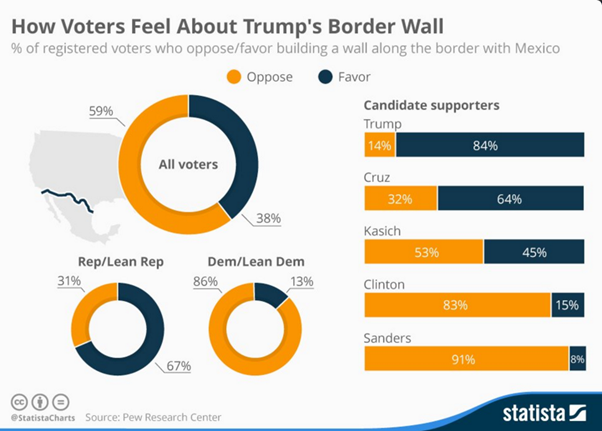
@BernieSanders just wants to build a different type of wall to @realdonaldtrump’s

image

@GarethMP @jamespeshaw need message discipline on @NZGreens as honest brokers

Yesterday morning, Green MP Gareth Hughes posted a British Greens’ video about how other politicians are a bunch of squabbling children but the Greens are above that. It’s only the Greens who offer a “true alternative to the establishment parties” and their “same childish Punch & Judy politics”.

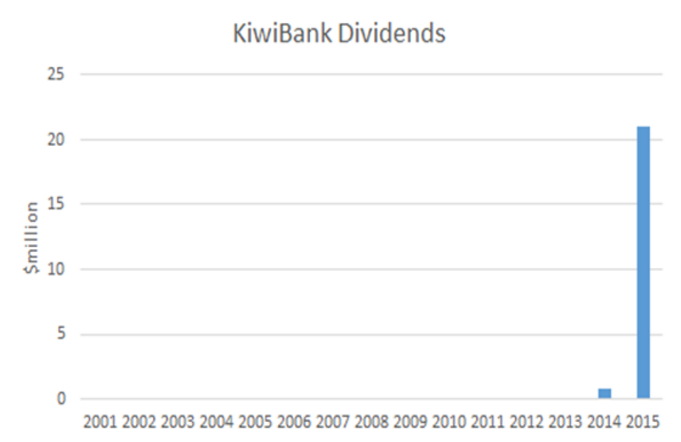
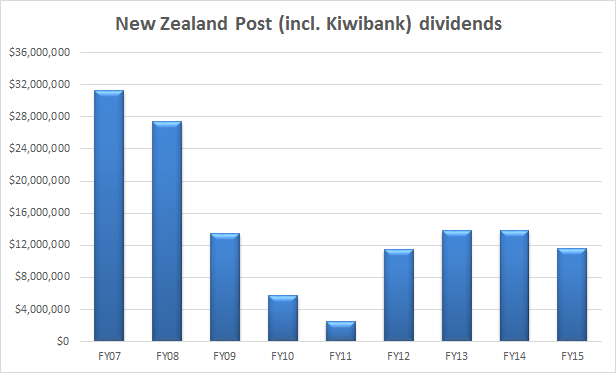
Later that same day Greens co-leader James Shaw posted a video that shaded the truth about the history of dividends from Kiwibank as a way of scoring points of the National Party led government.

Shaw claimed that the government is extracting more and more dividends from Kiwibank rather than letting it keep those profits as capital on which the government owned bank can be a more aggressive competitor.

image

Source: Kiwibank pays its first dividend of $21 million to Government | Stuff.co.nz.

Shaw is vaguely correct in that it is dividends plural when referring to Kiwibank’s dividends. Kiwibank paid dividends of $21 million last year; and $750,000 the year before. Kiwibank has paid two dividends to New Zealand Post in its entire history since 2002.

It shades the truth to say that the government is extracting more and more dividends from Kiwibank when when it has only paid one dividend worth mentioning, which was last year.

image

Source: New Zealand Treasury – data released under the Official Information Act.

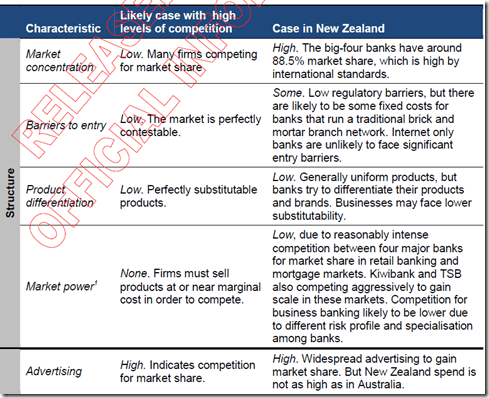
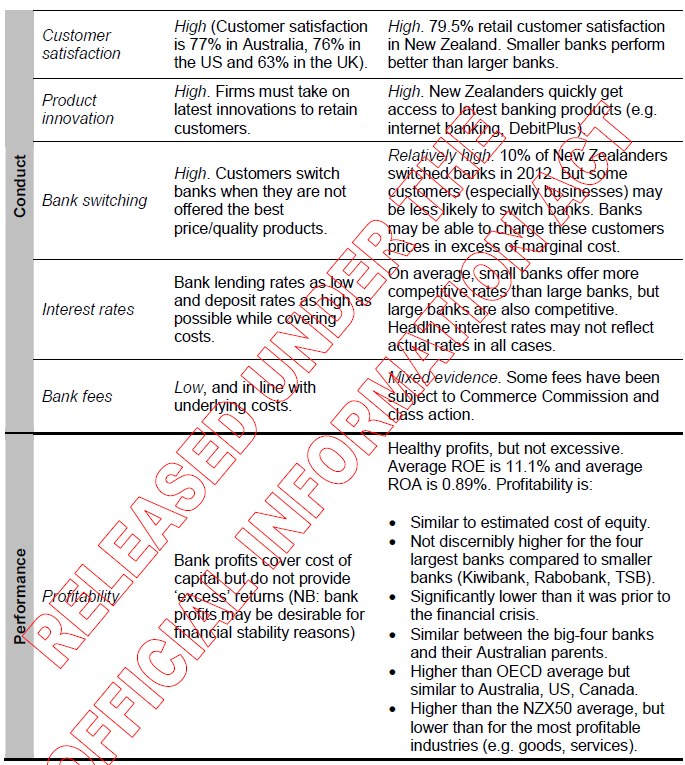
As for James Shaw’s claim that the entry of Kiwibank made banking in New Zealand much more competitive, Michael Reddell disposed of that by linking to a 2013 Treasury assessment of competition in retail banking.

image

image

Source: New Zealand Treasury Official Information Act Releases.

There are no excess profits in the New Zealand banking market for Kiwibank to undercut. Entry barriers are low, banking products are easy substitutes for each other between the competing banks, and the banks compete for market share by advertising  of, for example, special packages to switch banks.

Adding to the analysis of the Treasury, Posner and Easterbrook suggest that these industry behaviours together are suspicious.

  1. Fixed relative market shares among top firms over time.
  2. Declining absolute market shares of the industry leaders.
  3. Persistent price discrimination.
  4. Certain types of exchanges of price information.
  5. Regional price variations.
  6. Identical sealed bids for tenders.
  7. Price, output, and capacity changes at the time of the suspected initiation of collusion.
  8. Industry-wide resale price maintenance or non-price vertical restraints.
  9. Relatively infrequent price changes; smaller price reactions as a result of known cost changes.
  10. Demand is highly responsive to price changes at market price.
  11. Level and pattern of profits relatively favourable to smaller firms.
  12. Particular pricing and marketing strategies.

As the Treasury noted in its analysis, there are several small banks offering competitive rates that would allow them to expand if they offered value for money over the existing offerings. Returns on equity of the big banks are not discernibly higher than for the smaller ones.

To add again to the Treasury analysis, it is not easy to organize a cartel. There are markets to divide, prices to set, and production quotas to assign. The best place to be in a cartel is outside of it undercutting the higher price and selling as much as you can before the cartel inevitably collapses. Brozen and Posner suggest the following pre-conditions to collusion:

  • market concentration on the supply side;
  • no fringe of small sellers;
  • high transport costs from neighbouring markets;
  • small variations in production costs between firms;
  • readily available information on prices;
  • inelastic demand at the competitive price;
  • low pre-collusion industry profits;
  • long lags on new entry;
  • many buyers (otherwise selective discounting to big buyers will be too tempting while monitoring adherence to the agreement will be difficult);
  • no significant product differentiation;
  • large suppliers selling at the same level in the distribution chain;
  • a simple price, credit and distribution structure;
  • price competition is more important than other forms of competition;
  • demand is static or declining over time; and
  • stagnant technological innovation and product redesign.

Stable collusive arrangements are thus likely to be rare because the absence of any of the above conditions will tend to undermine the potential for successful collusion.

Successful cartel operation is even harder than its initial formation. Members of the cartel must continue to believe that they enjoy net profits from participating in the collusion.

The more profitable the collusive price fixing, the greater the incentive for outsiders to seek entry to compete. In cartel theory, these new entrants are known as interlopers.

image

The more numerous the participants in the cartel and the more lucrative the collusion, the greater the temptation for individual members to cheat and the greater the fear of each that some other member will cheat first.

Cartel members that cheat early profit the most from the cartel price before it collapses. That is why the history of cartels is a history of double-crossing. Long-term survival of the cartel has two fundamental requirements:

  1. cheating by a member on the cartel prices, outputs and market shares must be detectable; and

  2. detected cheating must be adequately punishable without breaking-up of the cartel.

If banking was a cartel, you would not see advertising on the TV every night inducing customers to switch but you do. That advertising is cheating on the banking cartel the New Zealand Greens want to break up.

There is an infallible rule in competition law enforcement. It arises mostly crisply in merger law enforcement. If competitors oppose a merger, the merger must be pro-consumer. If the merger is anti-competitive, that merger will increase prices. The competing firms can follow those prices up and profit from the weakening of competition subsequent to the merger.

@BernieSanders @realdonaldtrump want to reverse The Great Escape in developing countries

image

Source: TRANSCRIPT: Bernie Sanders meets with News Editorial Board – NY Daily News.

Source: If you’re poor in another country, this is the scariest thing Bernie Sanders has said – Vox.

Source: If you’re poor in another country, this is the scariest thing Bernie Sanders has said – Vox.

 .

Creative destruction in video store employment

image

Image

Previous Older Entries Next Newer Entries

Bassett, Brash & Hide

Celebrating humanity's flourishing through the spread of capitalism and the rule of law

Truth on the Market

Scholarly commentary on law, economics, and more

The Undercover Historian

Beatrice Cherrier's blog

Matua Kahurangi

Celebrating humanity's flourishing through the spread of capitalism and the rule of law

Temple of Sociology

Celebrating humanity's flourishing through the spread of capitalism and the rule of law

Velvet Glove, Iron Fist

Celebrating humanity's flourishing through the spread of capitalism and the rule of law

Why Evolution Is True

Why Evolution is True is a blog written by Jerry Coyne, centered on evolution and biology but also dealing with diverse topics like politics, culture, and cats.

Down to Earth Kiwi

Celebrating humanity's flourishing through the spread of capitalism and the rule of law

NoTricksZone

Celebrating humanity's flourishing through the spread of capitalism and the rule of law

Homepaddock

A rural perspective with a blue tint by Ele Ludemann

Kiwiblog

DPF's Kiwiblog - Fomenting Happy Mischief since 2003

The Dangerous Economist

Celebrating humanity's flourishing through the spread of capitalism and the rule of law

Watts Up With That?

The world's most viewed site on global warming and climate change

The Logical Place

Tim Harding's writings on rationality, informal logic and skepticism

Doc's Books

A window into Doc Freiberger's library

The Risk-Monger

Let's examine hard decisions!

Uneasy Money

Commentary on monetary policy in the spirit of R. G. Hawtrey

Barrie Saunders

Thoughts on public policy and the media

Liberty Scott

Celebrating humanity's flourishing through the spread of capitalism and the rule of law

Point of Order

Politics and the economy

James Bowden's Blog

A blog (primarily) on Canadian and Commonwealth political history and institutions

Science Matters

Reading between the lines, and underneath the hype.

Peter Winsley

Economics, and such stuff as dreams are made on

A Venerable Puzzle

"The British constitution has always been puzzling, and always will be." --Queen Elizabeth II

The Antiplanner

Celebrating humanity's flourishing through the spread of capitalism and the rule of law

Bet On It

Celebrating humanity's flourishing through the spread of capitalism and the rule of law

History of Sorts

WORLD WAR II, MUSIC, HISTORY, HOLOCAUST

Roger Pielke Jr.

Undisciplined scholar, recovering academic

Offsetting Behaviour

Celebrating humanity's flourishing through the spread of capitalism and the rule of law

JONATHAN TURLEY

Res ipsa loquitur - The thing itself speaks

Conversable Economist

In Hume’s spirit, I will attempt to serve as an ambassador from my world of economics, and help in “finding topics of conversation fit for the entertainment of rational creatures.”

The Victorian Commons

Researching the House of Commons, 1832-1868

The History of Parliament

Articles and research from the History of Parliament Trust

Books & Boots

Reflections on books and art

Legal History Miscellany

Posts on the History of Law, Crime, and Justice

Sex, Drugs and Economics

Celebrating humanity's flourishing through the spread of capitalism and the rule of law

European Royal History

Exploring the Monarchs of Europe

Tallbloke's Talkshop

Cutting edge science you can dice with

Marginal REVOLUTION

Small Steps Toward A Much Better World

NOT A LOT OF PEOPLE KNOW THAT

“We do not believe any group of men adequate enough or wise enough to operate without scrutiny or without criticism. We know that the only way to avoid error is to detect it, that the only way to detect it is to be free to inquire. We know that in secrecy error undetected will flourish and subvert”. - J Robert Oppenheimer.

STOP THESE THINGS

The truth about the great wind power fraud - we're not here to debate the wind industry, we're here to destroy it.

Lindsay Mitchell

Celebrating humanity's flourishing through the spread of capitalism and the rule of law

Alt-M

Celebrating humanity's flourishing through the spread of capitalism and the rule of law

croaking cassandra

Economics, public policy, monetary policy, financial regulation, with a New Zealand perspective

The Grumpy Economist

Celebrating humanity's flourishing through the spread of capitalism and the rule of law

International Liberty

Restraining Government in America and Around the World